What Kills Dallisgrass? Solutions That Actually Work
Published on
Dallisgrass is a stubborn weed that’s difficult to get rid of. You treat it, it turns brown, and a few weeks later, it’s back like nothing happened. That’s because dallisgrass isn’t just a surface weed. It has deep roots and a strong ability to recover.
So what actually kills dallisgrass? The short answer is that no single method works on its own. Effective control depends on using the right treatment at the right time, and often repeating the process.
In this guide, we’ll walk through how to identify dallisgrass, what kills it, how to treat it without damaging your lawn, and how to repair bare patches so it doesn’t come back.
Key Takeaways
- Dallisgrass is a deep-rooted perennial weed that is difficult to eliminate and often regrows if not fully treated.
- The most effective way to kill dallisgrass is through a combination of methods, including selective or non-selective herbicides and proper timing.
- Selective herbicides can control dallisgrass without harming bermudagrass or zoysiagrass, but they require repeated applications.
- Preventing regrowth depends on maintaining a healthy, dense lawn and applying pre-emergents at the right time.
- Repairing bare spots with SodPods® grass plugs helps restore your lawn and reduces the chances of dallisgrass returning.
What Is Dallisgrass and Why Is It So Hard to Kill?
Dallisgrass is a perennial, clumping grassy weed that thrives in warm, moist conditions. It grows in circular clumps and stands out from your lawn due to its coarse texture and fast growth.
According to the University of Florida IFAS, grasses like dallisgrass have hollow, rounded stems with visible nodes or joints, along with parallel veins in their leaves. These characteristics help distinguish it from other lawn weeds and turfgrass. Its aggressive growth habit and ability to spread from deep roots are what make it especially difficult to control once it becomes established.
How to Identify Dallisgrass in Your Lawn
Look for these common signs:
- Clumping or bunch-type growth pattern
- Wide, coarse blades that feel rough
- Tall seedheads with multiple finger-like spikes
- Faster growth than the surrounding grass
Why Dallisgrass Keeps Coming Back
Dallisgrass is difficult to eliminate because:
- It has deep roots and rhizomes that allow it to regrow
- It stores energy underground, even after treatment
- Seeds can remain viable in soil for years
- It can recover quickly after incomplete treatments
These traits are exactly why many quick fixes fail. Even if the top growth dies back after treatment, the roots can remain alive and send up new shoots within weeks.

What Kills Dallisgrass? Best Weed Treatment Options
There isn’t a single solution to address dallisgrass or any weed. The best approach depends on how widespread the problem is and how careful you need to be with your existing lawn.
Non-Selective Herbicides (Fastest Kill)
Non-selective herbicides kill everything they touch, including dallisgrass and your lawn.
- Best for isolated clumps
- Kills the entire plant, including roots
- Works quickly
- Must be applied carefully to avoid damaging nearby grass
This is often the fastest way to kill dallisgrass, but it also kills any desirable plants it comes into contact with, including your lawn, leaving bare spots behind.
Selective Post-Emergent Herbicides
Selective herbicides target dallisgrass while minimizing damage to your lawn.
- Ideal for moderate infestations
- Requires multiple applications
- Works best during active growth
- Must be effective on dallisgrass and safe for your specific grass type
This method takes longer but helps preserve surrounding turf because it often requires multiple applications to fully weaken and kill the plant down to the roots.
Pre-Emergent Herbicides
Pre-emergents do not kill existing dallisgrass. They are designed for prevention, stopping seeds from germinating before new weeds can establish, not for treating current clumps.
- Prevent seeds from germinating
- Best used in early spring
- Important for long-term control
Dallisgrass Treatment Comparison
|
Method |
Best For |
Effectiveness |
Risk to Lawn |
Notes |
|
Hand pulling |
Small patches |
Low–Moderate |
None |
Must remove full root |
|
Selective herbicide |
Moderate infestations |
Moderate |
Low |
Needs repeat applications |
|
Non-selective herbicide |
Severe or isolated clumps |
High |
High |
Kills surrounding grass |
|
Pre-emergent |
Prevention |
Moderate |
Low |
Timing is critical |
Natural and Non-Chemical Ways to Get Rid of Dallisgrass
The following methods work best for small infestations and early intervention, helping reduce dallisgrass in your lawn.
Hand Pulling
- Effective for small patches
- Remove the entire root system to prevent regrowth
- Works best when the soil is moist
Proper Lawn Care Practices
- Mow higher and more frequently
- Avoid cutting grass too short
- Reduce stress on your lawn
Improve Lawn Density
- A thick lawn naturally suppresses weeds.
- Healthy grass crowds out dallisgrass
- Reduces space for new growth
How to Kill Dallisgrass Without Killing Your Lawn
Chemical treatments are most effective when used as part of a complete control strategy. If you want to protect your lawn while getting rid of dallisgrass, precision and timing matter.
Spot Treatment Strategy
- Apply herbicide directly to dallisgrass clumps
- Avoid overspray onto healthy grass
- Use controlled applicators for better accuracy
Timing
Treat dallisgrass when it is actively growing
- Late spring to early summer
- Late summer to early fall
Additionally, avoid treating during drought or when your lawn is stressed. Applying treatments under poor conditions can reduce effectiveness and increase the risk of lawn damage
It’s also important to understand that one application is rarely enough. Dallisgrass can regrow from its roots, so follow-up treatments are often needed. With consistent timing and repeated applications, you’ll see better control over time rather than overnight results.
Why Most Dallisgrass Treatments Fail
Many homeowners struggle to get rid of dallisgrass because the approach often doesn’t match how this weed actually grows and survives. Dallisgrass is persistent, and without the right strategy, it can quickly recover even after treatment.
Treating only the visible leaves, not the roots -Dallisgrass may turn brown after treatment, but its deep root system can remain alive underground. If the roots aren’t fully affected, the plant can regrow within weeks.
Using the wrong herbicide for their grass type - Not all herbicides are safe for every lawn. Using a product that isn’t compatible with your grass type can either damage your lawn or fail to effectively control the dallisgrass.
Applying at the wrong time - Timing is critical for success. Applying treatments when dallisgrass is not actively growing, or when the lawn is stressed, can reduce effectiveness and limit how well the product works.
Stopping treatment too early - Dallisgrass rarely disappears after one application. Stopping too soon allows surviving roots to recover and continue spreading.
Allowing the lawn to become thin or weak - A thin lawn creates space for weeds to grow. Without strong, dense turf, dallisgrass can easily establish and return even after treatment.
Fixing these issues can make a big difference in long-term control.
How to Prevent Dallisgrass From Coming Back
Once you’ve removed dallisgrass, prevention becomes the priority.
Lawn Care Practices That Help
- Maintain proper mowing height for your grass type
- Water deeply but less frequently, aiming for 1-1.5 inches of water per week
- Use balanced fertilization
Use Pre-Emergent at the Right Time
- Apply in early spring to stop new seeds from germinating
Fill Bare Spots Quickly
- Open soil gives weeds space to grow
- Filling these spots helps prevent reinfestation
How to Repair Your Lawn After Killing Dallisgrass
Removing dallisgrass often leaves behind bare patches, and if these areas aren’t repaired quickly, weeds can easily return. Exposed soil creates the perfect space for new weeds to establish, especially when the surrounding turf is thin or weak.
Use SodPods® Grass Pods for Targeted Lawn Repair
One of the easiest ways to repair damaged areas is with SodPods grass plugs.
- More affordable than laying full sod
- Can be planted in stages based on your budget
- Ideal for bermudagrass, zoysiagrass, and St. Augustine lawns
- Helps fill in patches gradually with healthy and uniform growth
Instead of redoing your entire lawn, you can focus only on the damaged areas.
Tools That Make It Easier
To make planting easier and more effective:
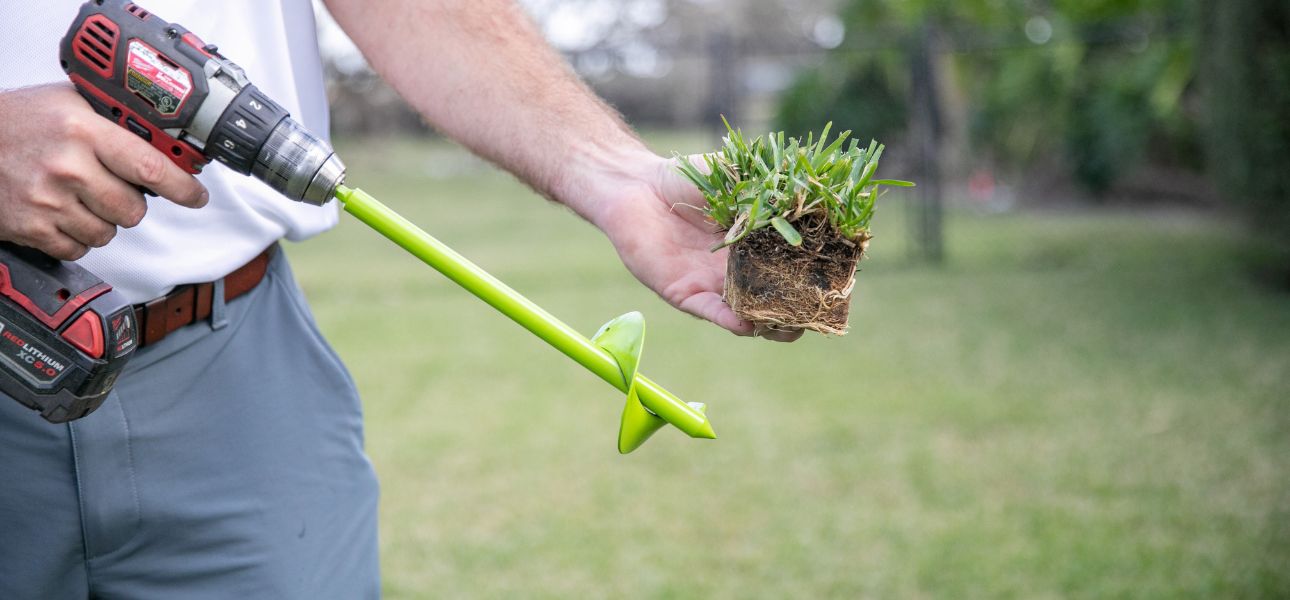
- Use an auger tool to dig consistent holes quickly
- Add starter fertilizer like NutriPod grass plug nutrition pods to support root establishment and early growth
These tools help simplify the process, especially for DIY homeowners.
Frequently Asked Questions (FAQs)
-
The fastest way to kill dallisgrass is by using a non-selective herbicide applied directly to the clump. This method kills the entire plant, including its roots. However, it will also kill any surrounding grass it touches, so careful spot application is important to minimize damage to your lawn.
-
Vinegar may burn the visible leaves of dallisgrass, but it does not penetrate deep enough to kill the root system. Because of this, the weed will likely regrow after a short time. It can be used for temporary suppression, but it is not a reliable long-term solution.
-
Yes, it is possible to kill dallisgrass without harming your desirable grass by using selective herbicides designed for your specific lawn type. These products target the weed while preserving turf, but they often require multiple applications and proper timing to achieve effective and lasting control. Always verify the product label is safe for your specific turfgrass type. Some herbicides that control dallisgrass may injure St. Augustinegrass, centipedegrass, or newly established lawns.
-
Dallisgrass keeps coming back because it has deep roots and stores energy underground, allowing it to recover after treatment. If the roots are not fully eliminated or treatments are stopped too soon, new shoots can emerge. Consistent, repeated applications are usually needed for long-term control.
-
The best time to treat dallisgrass is when it is actively growing, typically in late spring through early summer and again in late summer to early fall. Avoid applying treatments during drought or when your lawn is stressed, as this can reduce effectiveness and increase the risk of damage.
The Best Way to Get Rid of Dallisgrass for Good
Dallisgrass is tough, but it can be controlled with the right approach. The key is combining methods, applying treatments at the right time, and staying consistent. Just as important is what you do after removal. Repairing bare spots and maintaining a healthy, dense lawn helps prevent it from coming back.
Using SodPods grass plugs makes it easy to fill in those areas gradually, helping your lawn recover and grow back thicker over time. If you're looking for an easier alternative to buy grass sod, explore SodPods to repair your lawn efficiently without starting from scratch. With a clear plan and the right tools, you can take control of dallisgrass and keep your lawn looking full and healthy.